Most people shopping for jeans today have spent their entire adult lives wearing synthetic blends without realizing it. Walk through any department store or scroll through any retail app, and you will find pants made with one, two, or even four percent elastane, polyester, or polyurethane. These blends were engineered to provide instant gratification. They slide on like loungewear, hug the body without resistance, and require zero patience from the buyer.
When someone accustomed to stretch denim puts on a pair of authentic, 100% cotton jeans for the first time, the reaction is almost always confusion, if not mild shock.
Pure cotton denim does not yield to your posture the second you pull it on. It sits heavy against the skin. It feels dense, dry, and distinctly structural, bearing more resemblance to an architectural canvas than to the soft knitwear disguised as denim on modern retail racks. Understanding what pure cotton actually feels like requires looking past the expectation of instant elasticity and appreciating how natural plant fibers behave across hours, months, and years of authentic wear.
The Immediate Sensation: Resistance and Weight
The initial sensation of stepping into all-cotton denim is defined by resistance. There is no elastic rebound waiting to accommodate a hasty stride or an awkward stretch. The waistband sits firm against the hips. When you sit down, the fabric exerts a noticeable pressure across the thighs and behind the knees, reminding you of its presence with every millimeter of movement.
This resistance stems from the nature of pure cellulose fibers. Unadulterated cotton yarns are spun tight and woven under heavy mechanical tension. Unlike synthetic threads that snap back like rubber bands, rigid cotton yarns stay where the loom put them. If the denim has been starched during the finishing process, it will feel stiff, almost brittle, as if the garment could stand up on its own in the middle of a room.
There is also a tactile chalkiness to unwashed or lightly treated cotton. The surface is not slick or slippery. When you brush your hand across the leg, your fingers catch on the microscopic grain of the weave. It feels dry and earthy. For someone raised on the silky glide of polyester-rich stretch jeans, this texture can feel surprisingly raw, but it is precisely this raw texture that makes the fabric durable.
The Architecture of the Weave: Yarn, Direction, and Texture
What you feel on the outside of pure cotton denim is entirely different from what sits against your skin on the inside. This dichotomy comes from the traditional twill weave.
Denim is constructed with an indigo-dyed warp yarn running vertically and an undyed, natural ecru weft yarn running horizontally. The warp threads are packed tightly on the face of the fabric, creating the deep, saturated exterior. The reverse side, which rests against your legs, is dominated by the softer, unbleached weft yarns. Even when the outer face feels rough and abrasive, the inside provides a smooth, cool touch against bare skin.
The sensory profile of all-cotton denim shifts significantly depending on the weaving techniques employed:
-
Ring-Spun vs. Open-End Yarns: Cheaply made cotton denim often relies on open-end spinning, which creates a flat, paper-like surface with little personality. High-grade cotton denim uses ring-spun yarns, which leave subtle irregularities, known as slub, along the length of the thread. Running your palm down a pair of ring-spun jeans reveals gentle textural hills and valleys that feel rich and deliberate.
-
Twill Direction: Right-hand twill, the global standard popularized by historical workwear, runs diagonally upward to the right. It produces a crisp, clean hand-feel that holds sharp creases. Left-hand twill, by contrast, runs upward to the left; as the weave naturally loosens with wear, it yields an exceptionally buttery, flannel-like softness that right-hand weaves rarely replicate.
-
Loom Tension: Denim woven on modern projectile looms tends to be uniform and uniform in texture. Vintage shuttle-loom denim, commonly called selvedge, is produced under lower, variable tension. The result is a fabric filled with character, featuring a textured tooth that catches the light and feels substantial beneath your fingertips.
Decoding Denim Weight
One cannot talk about the tactile reality of 100% cotton without addressing weight, measured in ounces per square yard of fabric. Because cotton lacks synthetic fillers, weight dictates everything about how the garment moves, drapes, and breathes.
Lightweight Denim (Under 11 Ounces)
Lightweight cotton denim feels breezy and soft almost immediately. It drops easily around the legs, creating a fluid, breezy drape suitable for humid summer afternoons. While it lacks the armor-like heft of heavier weaves, it provides a light, crisp structure that linen and rayon cannot match.
Midweight Denim (12 to 14 Ounces)
This is the golden mean of traditional denim. A 13-ounce, 100% cotton fabric offers enough backbone to carve out clean, intentional lines without making daily movement a physical chore. Out of the box, it feels sturdy and protective. It takes approximately three to four weeks of consistent wear for a midweight pair to relax into its permanent comfort zone.
Heavyweight Denim (15 Ounces and Beyond)
Heavyweight cotton is where denim transforms into a physical challenge. Fabrics weighing 16, 18, or 21 ounces feel like heavy harness leather on day one. Bending your knees creates sharp pinch points in the fabric folds. The waistband requires genuine effort to button. Yet for denim purists, this extreme density is unmatched. It cuts the wind completely, protects against cold concrete, and offers a reassuring, weighted-blanket sensation that no lightweight stretch fabric can approximate.
The Break-In Curve: How Cotton Molds to the Body
The fundamental difference between pure cotton and stretch fabrics lies in how they age. Stretch denim feels its absolute best the moment you buy it in the store; from that day forward, the elastic filaments degrade, bag out at the knees, and lose their recovery. Pure cotton works in reverse. It begins at its least comfortable state and improves every single time you wear it.
This transformation is driven by friction, body heat, and humidity. As you walk, sit, and move, your body heat warms the cotton fibers, causing the tight twists of the yarn to expand and relax. The starch embedded in the weave fractures along your natural movement axes: across the lap where your hips hinge, behind the knees where the fabric accordions, and around the ankle where the hem breaks.
Within a month of regular wear, pure cotton undergoes a structural metamorphosis. The rigid cylinder becomes a bespoke mold of your lower body. The denim no longer resists your movements because the fabric has creased permanently where you bend. Where the jeans press closest to your body, the outer layers of indigo rub away, exposing the soft, white cotton core underneath. What started out feeling like heavy canvas gradually takes on the supple hand of broken-in buckskin.
Climate Control and the Physics of Natural Cellulose
There is a widespread misconception that 100% cotton jeans are hot and suffocating compared to modern stretch pants. The opposite is true.
Synthetic fibers like elastane and polyester are non-porous plastics. When spun into yarn, they create microscopic thermal barriers that trap moisture and body heat against the skin. This is why a pair of stretch jeans can feel stifling and clammy on a humid afternoon, causing the fabric to stick uncomfortably to your calves and thighs.
Cotton, by comparison, is an organic cellulose fiber with a hollow core. It breathes naturally. Air moves through the twill weave, allowing perspiration to evaporate rather than pooling against your skin. In warm weather, unwashed or properly broken-in cotton feels dry, airy, and shaded. In cold weather, the density of mid-to-heavy cotton blocks biting winds, retaining pocketed air warmed by your body heat without generating synthetic humidity.
Furthermore, natural cotton fibers do not hold onto bacterial odors the way petroleum-based synthetics do. You can wear a pair of 100% cotton jeans dozens of times between washes, hanging them up to air out overnight, and they will smell neutral the following morning. Synthetics, by contrast, bond quickly with skin oils, requiring constant trips through the laundry that accelerate the breakdown of the garment.
The Visual Tell: Drape and Silhouette
How denim feels is inextricably linked to how it hangs. Pure cotton has structural integrity, meaning it holds its own shape independently of the legs inside it.
Stretch denim hugs every contour. It grips the calf, clings to the rear, and ripples along the seams, emphasizing irregularities in body shape while projecting a distinctly casual, athletic look.
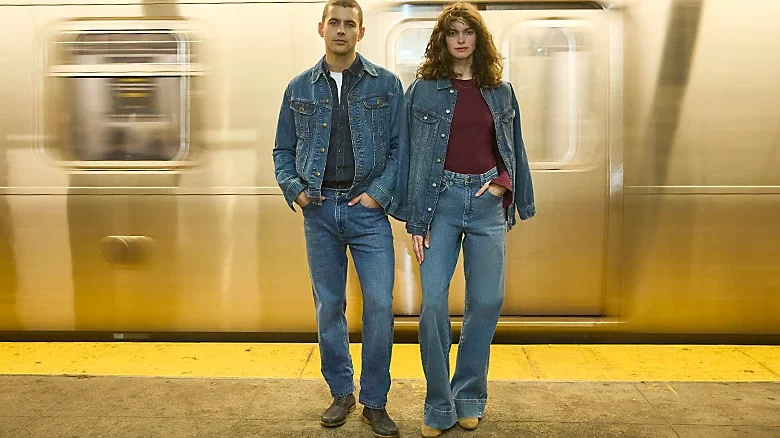
Pure cotton drops from the hip in a clean, vertical line. Because the fabric possesses inherent weight and stiffness, it creates a crisp, tailored architectural drape. The outseams remain straight and plumb. The hem breaks cleanly over boots or sneakers without collapsing into messy, limp puddles of fabric. Even in relaxed or wide-leg cuts, 100% cotton looks deliberate, elevated, and classic, delivering an unmistakable silhouette that designers have relied upon for more than a century.
The Long-Term Reality: Durability Over Disposability
Investing in 100% cotton denim requires shifting your perspective from short-term ease to long-term satisfaction.
When you buy pure cotton, you are purchasing a garment that is physically repairable. Cotton fibers absorb wear gracefully; when high-friction zones like the inner thighs or cuffs eventually thin out, the surrounding fabric retains enough structural strength to accept darning, patch repairs, and hand stitching. Stretch denim, on the other hand, cannot be cleanly repaired once the fragile elastane threads snap; the fabric bubbles, ripples, and tears away from needle holes.
Embracing all-cotton denim means accepting an honest dialogue between you and your clothing. It demands an initial investment of patience, asking you to break through a wall of stiffness and structural reserve. But what awaits on the other side of that break-in period is a pair of jeans that fits your specific proportions better than any synthetic blend ever could—a garment that feels substantial, breathes with your body, and carries the physical imprint of your daily life in every softened fiber.