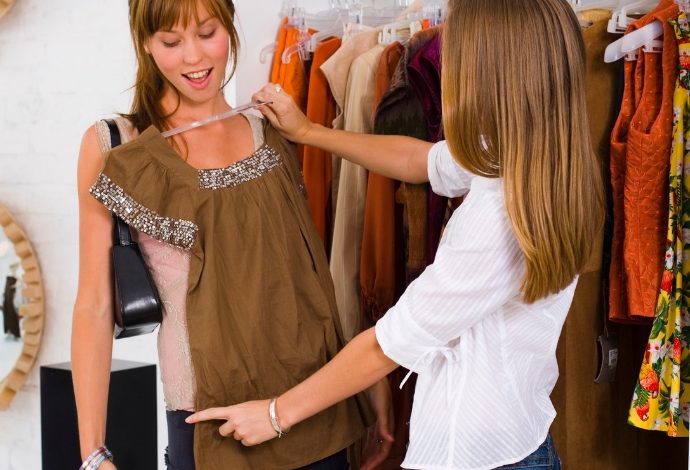
Walk into any clothing boutique or browse an online storefront, and the retail environment is engineered to mask structural flaws. Flattering fitting-room lighting, pristine steam jobs, and careful styling can easily make a cheap synthetic blend look indistinguishable from an investment-grade piece. Price tags have long ceased to serve as reliable benchmarks for craftsmanship. Luxury labels routinely cut production corners to preserve profit margins, while smaller independent workshops often construct garments built to endure decades for a fraction of the cost.
To curate a wardrobe that withstands real-world friction and repeated laundering, you have to look past the silhouette and evaluate clothing as an engineered physical object. Evaluating garment quality requires an organized tactile inspection: testing the raw textile, scrutinizing the internal seam architecture, testing the fasteners, and checking the structural cut. Cultivating an editor’s eye allows you to identify true value in minutes, protecting your budget and ensuring that what you buy remains in rotation for years to come.
The Textile Test: Fiber Composition and Fabric Mechanics
Every garment begins with its raw material. No amount of precise tailoring can salvage inferior yarn, and modern fabric finishers can temporarily disguise brittle, low-grade fibers with synthetic silicone washes that wash down the drain on the first cycle.
Reading the Composition Label
Before touching the fabric, locate the interior care tag. While natural fibers such as long-staple cotton, wool, linen, and silk are generally superior in durability, breathability, and aging characteristics, the presence of synthetic fibers does not automatically signal poor quality. Context dictates value. A two percent addition of elastane in a structured pair of raw denim offers functional ease without degrading fabric integrity, and a nylon blend in an overcoat or pair of socks significantly enhances abrasion resistance.
Red flags appear when synthetics are substituted for primary structural fibers. An acrylic sweater masquerading as cashmere will pill aggressively within hours of wear because short acrylic staples break and tangle under minimal friction. Similarly, heavy polyester linings in wool blazers turn breathable tailoring into an unventilated trap. Look for fibers that match the garment’s functional purpose.
The Light and Density Inspection
Hold the unlined section of a garment up against a direct light source. High-grade woven textiles feature a dense, uniform grid. If you notice irregular gaps, thin patches, or inconsistent yarn thickness in a fabric that is not deliberately textured like linen or slub cotton, the mill cut costs during the spinning and weaving phases. Low-density weaves stretch out of shape quickly at stress points like elbows, seats, and knees.
The Crumple and Recovery Check
Gather a handful of the garment’s body fabric, compress it firmly in your fist for five seconds, and release it. High-quality wool, silk, and resilient cotton varieties will bounce back with noticeable elasticity, shaking off severe wrinkles within seconds. If the fabric stays creased, stiff, and papery, it was likely saturated with chemical sizing agents to give an insubstantial textile temporary body on the retail hanger. Once washed, that synthetic body will disappear, leaving behind a limp, shapeless shell.
Inspecting Seam Architecture and Thread Mechanics
Turn the garment inside out before stepping into the fitting room. The interior tells the unvarnished truth about the factory’s production standards, revealing where time was saved and where craftsmanship was prioritized.
Measuring Stitches per Inch
Examine the external seams along the collar, placket, or side seams. Count the stitches within a one-inch span. Premium dress shirts and tailored garments typically feature sixteen to twenty-two stitches per inch, creating a dense, fine seam that lies flat against the body. Fast-fashion manufacturers often drop stitch density down to eight to ten stitches per inch. Fewer stitches allow assembly machines to run faster and consume less thread, but the resulting seams are structurally weak, prone to snagging, and prone to pulling apart under tension.
Interior Seam Finishes
Examine how raw interior edges are bound:
-
French Seams: Common in luxury blouses and delicate silks, this technique encloses the raw edge entirely inside a double-stitched fold, leaving no exposed fibers to fray.
-
Flat-Felled Seams: The gold standard for denim, work shirts, and outerwear, this construction uses parallel rows of visible stitching to lock two pieces of fabric together flat, offering incredible resistance to shear stress.
-
Hong Kong or Bias Binding: Often found in unlined sport coats and premium jackets, the raw fabric edges are encased in strips of fine silk or cotton tape.
-
Overlocked or Serged Edges: While serging is standard for knitwear, a solitary, narrow three-thread serged edge on a structured woven garment indicates cost-cutting. If the thread loops look loose or pull away from the edge when tugged, the garment will unravel over time.
The Tension Pull Test
Grip the fabric with both hands on either side of a major seam and gently pull perpendicular to the stitch line. A balanced, well-calibrated machine produces a seam that stays completely closed under light tension. If you see daylight between the pattern pieces, or if the stitches resemble the rungs of a ladder pulling out of the cloth, the machine tension was poorly set. Those seams will fail the moment you sit down or reach overhead.
The Integrity of Hardware and Fasteners
Fasteners are the moving mechanical components of a garment. When a manufacturer cuts corners, hardware is usually the first casualty.
Button Material and Anchoring
Plastic buttons stamped out of cheap resin are brittle, lightweight, and easily cracked by commercial dry cleaning presses. Premium garments employ natural materials: carved horn, corozo nut, mother-of-pearl, or heavy enameled metal.
Beyond the material, inspect how the buttons are sewn to the cloth. Heavy winter coats and tailored jackets require thread shanks—a wrapped column of thread beneath the button that elevates it slightly above the fabric surface. Without a shank, thick coat fabric cannot sit cleanly beneath the buttoned flap without puckering. On shirts, look for cross-stitched anchors rather than two parallel lines of thread, and check that the reverse side features a reinforcing backing button or specialized lock-stitch knots.
Buttonhole Density
Examine the buttonholes closely. High-grade buttonholes feature dense, tightly spaced purl stitches that completely enclose the cut slit in the fabric. Inferior garments cut the hole after stitching with dull blades, leaving frayed fabric threads poking through the thread boundary. Outerwear should feature reinforced keyhole buttonholes, which include an enlarged circular opening at the outer edge to seat a heavy button shank without distorting the surrounding cloth.
Zipper Fluidity and Weight
Test every zipper by pulling it through its full travel three or four times. High-quality metal or molded plastic teeth glide smoothly without catching or hitching. The zipper tape should be sewn completely straight; any rippling or puckering along the zipper track indicates that the operator stretched the textile while feeding it through the feed dogs. Check that the top and bottom stops are made of solid metal rather than heat-sealed plastic tabs that shear off under moderate force.
Pattern Alignment, Grainlines, and the Cut
How fabric is laid out on the cutting table determines how the garment behaves across its lifespan. This is where manufacturers make their most expensive compromises.
The Hidden Trap of Off-Grain Cutting
Every woven textile has a warp running lengthwise and a weft running crosswise. Quality garments are cut strictly on-grain, meaning the vertical panels align precisely with the vertical warp threads. To squeeze more pieces out of a single bolt of cloth and eliminate waste, budget manufacturers will rotate pattern pieces by a few degrees off-grain.
You can identify off-grain cuts on the hanger. Hold a pair of trousers or a T-shirt up by the top seams and let it hang freely. If the side seams begin to spiral toward the front or back rather than dropping plumb, the pattern was cut off-grain. Once washed, the fibers will attempt to return to their natural orientation, permanently twisting the garment around your leg or torso.
Matching Patterns Across Seams
Plaids, stripes, and bold geometric prints demand meticulous pattern matching. High-end makers ensure that horizontal stripes continue unbroken across side seams, sleeve heads, front plackets, and chest pockets. Aligning these elements requires cutting fabric panels individually by hand, wasting significant yardage. When you spot a shirt where stripes collide at jarring, mismatched angles across the front closure, you are looking at rapid, uncalibrated mass production.
Linings, Interfacing, and Tailoring Allowances
The interior architecture provides the structural skeleton that maintains a garment’s silhouette through long days of movement.
Floating Canvas vs. Fused Interfacing
In tailored jackets, the chest and lapels require internal stiffening to hold their shape over your chest. Budget jackets rely entirely on fused interfacing—a synthetic stiffener glued directly to the outer wool with heat-activated resin. Over time, humidity and dry cleaning cause this glue to degrade, resulting in permanent bubbling across the chest and lapels.
Premium jackets feature a sewn-in floating canvas crafted from horsehair and wool. Pinch the fabric of the jacket lapel: gently separate the outer wool from the interior lining. If you can feel a distinct, unglued third layer floating freely between your fingers, the jacket is canvassed. It will mold to your body over time rather than bubbling or delaminating.
Generous Seam and Hem Allowances
Turn up the hem of a pair of trousers, a skirt, or an unlined jacket. Well-made garments feature generous hem allowances of two to three inches, along with extra fabric left along the seat and side seams. This extra allowance signals that the maker intended the garment to be altered, repaired, and passed between owners. Fast-fashion items cut these margins down to the bare minimum—often less than a half inch—making simple alterations or letting out impossible.
Cultivating an Inspector’s Mindset
Assessing garment quality is not about chasing brand prestige or hoarding rare textiles. It is about demanding mechanical integrity from the objects you bring into your life. When you evaluate clothing through physical, objective metrics—testing fabric recovery, verifying stitch counts, examining internal finishes, and confirming that the panels were cut on-grain—you take control of your purchases. High-grade construction pays for itself through unmatched comfort, reliable drape, and a lifespan measured in decades rather than seasons.