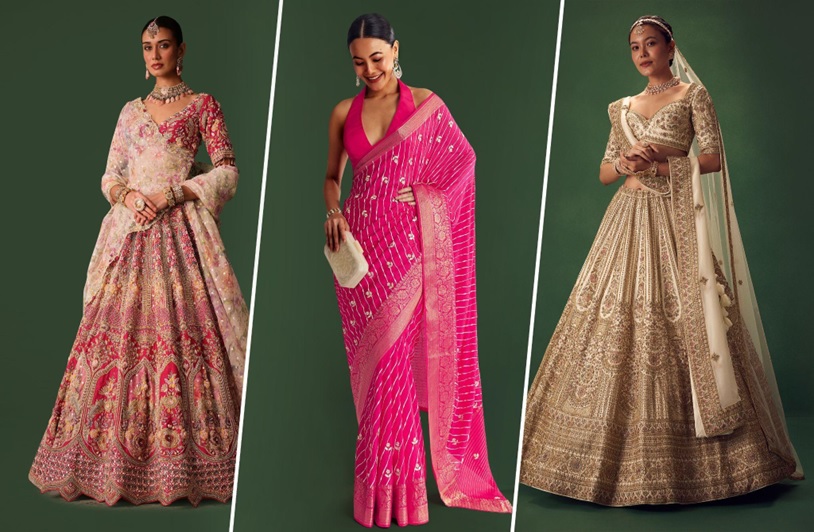
Gujarati weddings are colorful, steeped in tradition, and full of age-old rituals, and no wedding bridal outfit embodies that essence better than the Gujarati saree for wedding. Symbolic, detailed, and with that unmistakable draping flair, Gujarati bridal wear is a resplendent blend of heritage and poise.
From the legendary Panetar saree to the Leheriya Bandhani saree in every hue, Gujarati bridal wear incorporates culture in each element. This guide navigates the most critical outfits, sarees, and lehengas that encapsulate Gujarati bridal wear, providing helpful styling tips for modern brides to pay homage to tradition in fashion.
Traditional Gujarati Bridal Wear and Its Significance
The Legacy of the Panetar Saree for Bride
The Panetar saree for bride functions is one of the most important and revered dresses in a Gujarati marriage. Historically presented by the maternal uncle, the Panetar saree is draped in the wedding ceremony (mainly in Gujarati Hindu and Jain practices). It represents purity, change, and the holy start of wedded life.
A Gujarati Panetar saree, which is a traditional one, is usually of ivory or white silk with red pallu and borders decorated with gold zari or woven patterns. The red represents marital happiness and fertility, as well as the white, representing purity and peace.
Usually accompanied by a Panetar choli for a wedding, this outfit is draped in the traditional Gujarati seedha pallu fashion, wherein the pallu is brought forward across the right shoulder and draped over the front, a typical Gujarati wedding dress feature.
Cultural Meaning Behind the White and Red Gujarati Wedding Dress
The Gujarati white and red lehenga wedding or Panetar saree is very symbolic in Gujarati tradition. This color combination indicates both good fortune and the sacredness of the wedding ceremonies. In contrast to most Indian states, where the brides wear deeper shades like maroon or gold, the Gujarat bridal color palette is towards brighter whites and vibrant reds with a hint of gold.
In contemporary weddings, the brides also accompany this palette with sheer embroidery, mirror work, or pale sequins to create a personal style statement while being respectful of traditions.
This group of clothes, be it a saree or Gujarati lehenga for a wedding, is especially donned for saat phere (wedding rites) or grihapravesh (bride’s welcome into the groom’s house), and hence, one of the most emotionally charged outfits in a Gujarati bride’s wardrobe.
Leheriya and Bandhani Sarees in Pre-Wedding Rituals
While the wedding day is eclipsed by the Panetar saree, Leheriya and Bandhani sarees have to be included for the pre-wedding ceremonies such as mehndi, haldi, mandap mahurat, and garba nights.
- Bandhani Sarees: With tie-dye patterns featuring small dot designs, Bandhani sarees are conventionally Gujarati and Rajasthani. They are presented in lively colors such as yellow, pink, green, and blue, representing happiness, celebration, and renewal.
- Leheriya Sarees: With their wave-like pattern of dyes, Leheriya sarees are particularly favored for garba night and dance events. These vibrant sarees embody celebration, liveliness, and movement.
These sarees are typically created in chiffon, georgette, or cotton blends to provide comfort and sophistication. For brides, they present the ideal combination of cultural beauty and practical convenience throughout energetic, dance-filled ceremonies.
Must-Have Outfits for a Gujarati Wedding
A Gujarati wedding is not a one-day event; it’s a cascade of ceremonies, each necessitating unique and significant attire. Here’s a handpicked list of essentials every bride or close relative must keep in mind:
- Classic Panetar Saree
The absolute showstopper of Gujarati bridal wear. Invest in a premium silk Panetar saree for the bride with lavish zari, contrast red pallu, and symbolic designs such as elephants, kalash, or lotus.
- Gujarati White and Red Lehenga for Wedding
For brides who love lehengas more than sarees, the Gujarati white and red lehenga for weddings is ideal. Embellished panels, mirror work, and contrasting dupattas give this look a majestic touch while maintaining cultural authenticity.
- Bandhani Saree for Mehndi or Mandap Mahurat
Opt for a colorful Bandhani saree with threadwork or mirror work for pre-wedding ceremonies. It’s traditional, light, and festive.
- Leheriya Saree for Garba Night
Choose a bold, multi-colored Leheriya bandhani saree with a backless choli or an ornate blouse for your garba night. It’s practical for dancing and eye-catching.
- Gujarati Lehenga for Wedding Reception
Later on, most Gujarati brides opt for a more substantial Gujarati lehenga for the wedding reception with stones, sequins, and heavy velvets in darker hues such as maroon, gold, or royal blue.
Each one of these ensembles plays a special part in the wedding process and expresses various sides of Gujarati culture, beauty, and feeling.
Conclusion
Gujarati wedding fashion is a stunning amalgam of ritual, symbolism, and colorful design. From the holy beauty of the Panetar saree in bride ceremonies to the colorful vigour of Leheriya Bandhani sarees, every garment speaks a story of family, culture, and celebration.
Whether a traditional bride in a Gujarati saree for wedding ceremonies or a contemporary bride opting for the Gujarati white and red lehenga for wedding, the idea is to respect heritage and reflect your own personality.
FAQs – Gujarati Bridal Wear Guide
What is the significance of a Panetar saree in Gujarati weddings?
It represents chastity and wedded happiness and traditionally is presented by the bride’s maternal uncle for the wedding ritual.
How do I style a Gujarati saree for wedding events?
Match it with classic gold jewelry, seedha pallu drape, elaborate cholis, and complementary bangles or bajubandh.
What’s the difference between a Bandhani saree and a Panetar saree?
Bandhani incorporates tie-dye dot designs and is worn for pre-wedding ceremonies, and the Panetar is a red and white formal saree to be worn on the wedding day.
Can I wear a Gujarati lehenga for wedding functions outside Gujarat?
Yes, sure. A Gujarati lehenga for wedding occasions is suitable for any Indian wedding and gives your attire a regional touch.
Is the red and white Gujarati wedding dress still trending?
Yes, it’s classic and symbolic, although contemporary brides are also trying out pastels and adorations with the red-white foundation still intact.


